Viktor Schmidt · 9 November 2026
Heathgate Night Sky Watchers Log Clearer Celestial Views Across Protected Zones
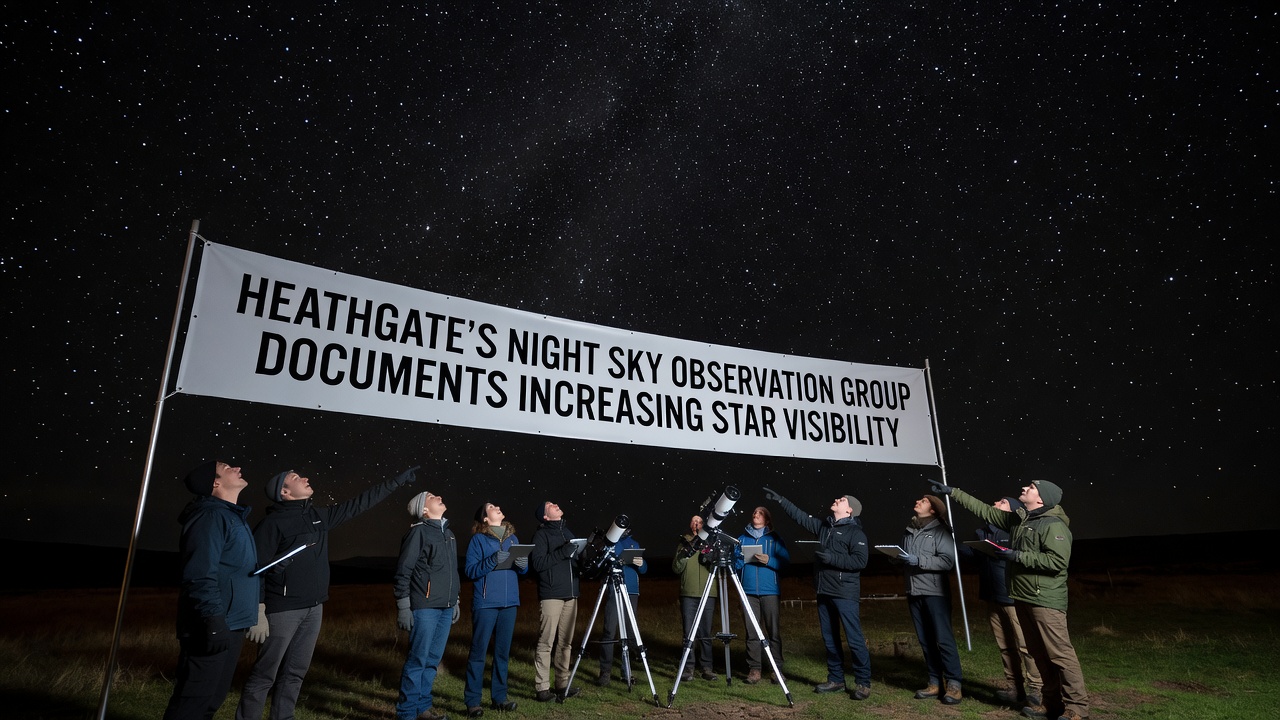
Residents in Heathgate have tracked measurable improvements in star visibility through consistent monitoring efforts by the local Night Sky Observation Group and data collected over multiple seasons shows reduced interference from artificial lighting while conservation measures in surrounding heathland areas contribute to these shifts. The group formed in 2018 to record baseline conditions and has since compiled monthly logs that compare current observations against earlier records.
Monitoring Methods and Data Collection
Volunteers use standardized sky quality meters along with visual magnitude charts to document conditions at fixed sites across the village and surrounding reserves and readings taken during clear nights reveal incremental gains in the number of stars visible to the naked eye. These measurements align with broader patterns noted by similar programs in other protected rural areas where light reduction strategies have been applied over time. In November 2026 the group released its latest annual summary covering observations from the previous twelve months and the report details how average sky brightness levels have declined by measurable percentages at key locations.
Contributing Factors in the Landscape
Protected heathland zones limit new development while existing infrastructure upgrades such as shielded street lamps and reduced outdoor illumination at community facilities have lowered overall light spill and these changes allow fainter stars to appear more distinctly against darker backgrounds. Observers note that certain constellations previously obscured now register clearly on nights with minimal cloud cover and wildlife corridors maintained under local bylaws further support darker conditions by restricting vehicle access after dusk. Research from the European Southern Observatory indicates that coordinated regional efforts to manage artificial light can produce noticeable enhancements in sky transparency within five to seven years and Heathgate's records correspond with those timelines.
Community participation has grown steadily with residents joining regular viewing sessions that combine data gathering and educational talks and schools in the area incorporate sky observation into science curricula using the group's archived figures for comparison exercises. Equipment donations from regional astronomy clubs have expanded the range of instruments available including digital cameras adapted for low-light capture and these tools help verify visual counts with photographic evidence.
Comparisons With Broader Trends
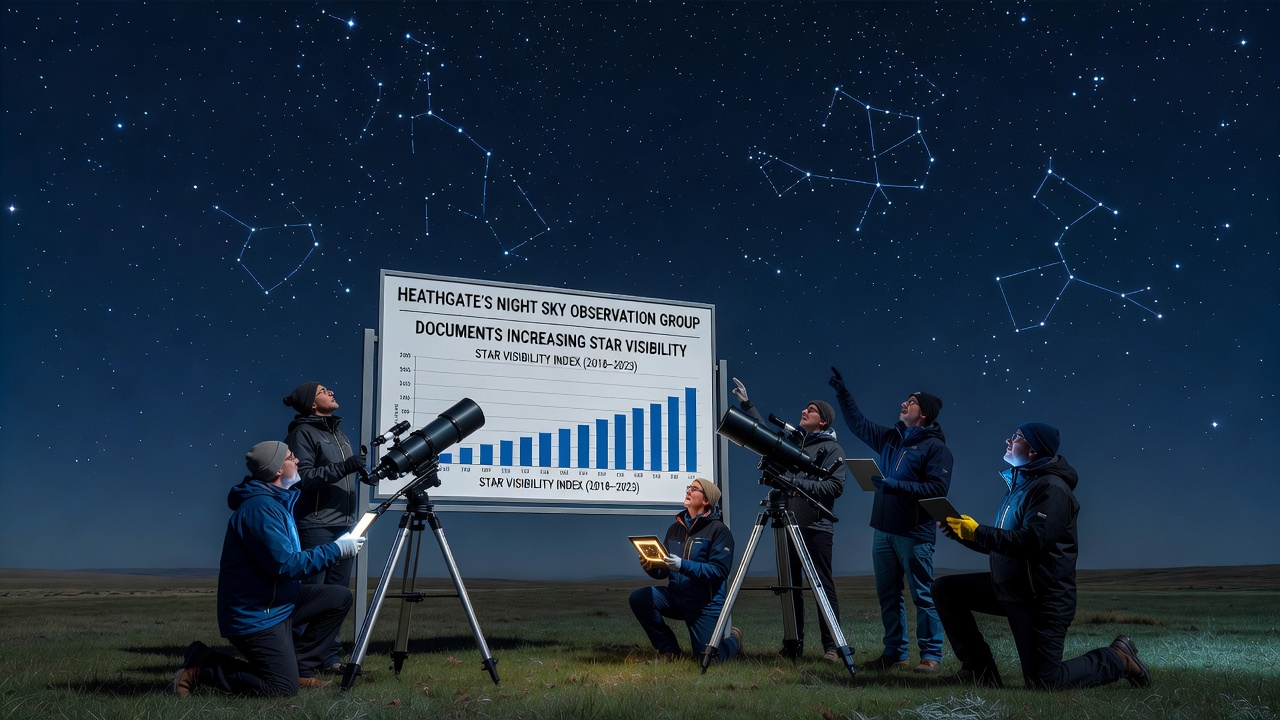
Figures compiled by the group show that visibility of stars at magnitude 5.5 and fainter has increased at several monitoring points since 2020 and similar gains appear in reports from the Canadian Dark Sky Preserve network where comparable land management practices operate. Those programs emphasize the role of buffer zones around observation sites and Heathgate applies parallel approaches through its heath preservation guidelines. Data collected during the 2025-2026 period also highlights seasonal variations with autumn and winter months yielding the most consistent results due to longer nights and lower humidity levels.
Local planners reference the observation logs when evaluating lighting proposals for new pathways or event spaces and this integration ensures continued attention to sky quality alongside other environmental priorities. Partnerships with nearby universities have introduced student-led analysis sessions that process raw meter readings into trend graphs and these collaborations add technical depth to the volunteer effort without altering its core focus on long-term documentation.
Community Engagement and Educational Outreach
Public events organized by the group draw participants from surrounding villages and sessions held in November 2026 featured presentations on constellation identification alongside updates on visibility metrics. Attendees learn to interpret meter readings and contribute their own observations through a shared online log that aggregates data from multiple sites. Such activities build awareness of how small adjustments in daily lighting habits accumulate into larger environmental effects over successive years.
Future Monitoring Plans
The observation group intends to expand its network of fixed monitoring stations along established boundary trails and plans include calibration checks against reference instruments from national meteorological services. Continued collection will allow direct comparison with findings from the Australian Dark Sky Alliance which maintains parallel programs in comparable rural settings and these cross-references help validate local results against wider datasets.
Conclusion
Heathgate's Night Sky Observation Group maintains detailed records that document progressive gains in star visibility tied to land management and lighting practices and the accumulated data provides a factual basis for ongoing community discussions around environmental stewardship. Monthly logs and annual summaries continue to serve as reference points for both residents and external researchers interested in rural sky conditions.