Clara Wagner · 23 November 2026
Regional Volunteers Drive Heathgate Heritage Railway Revival
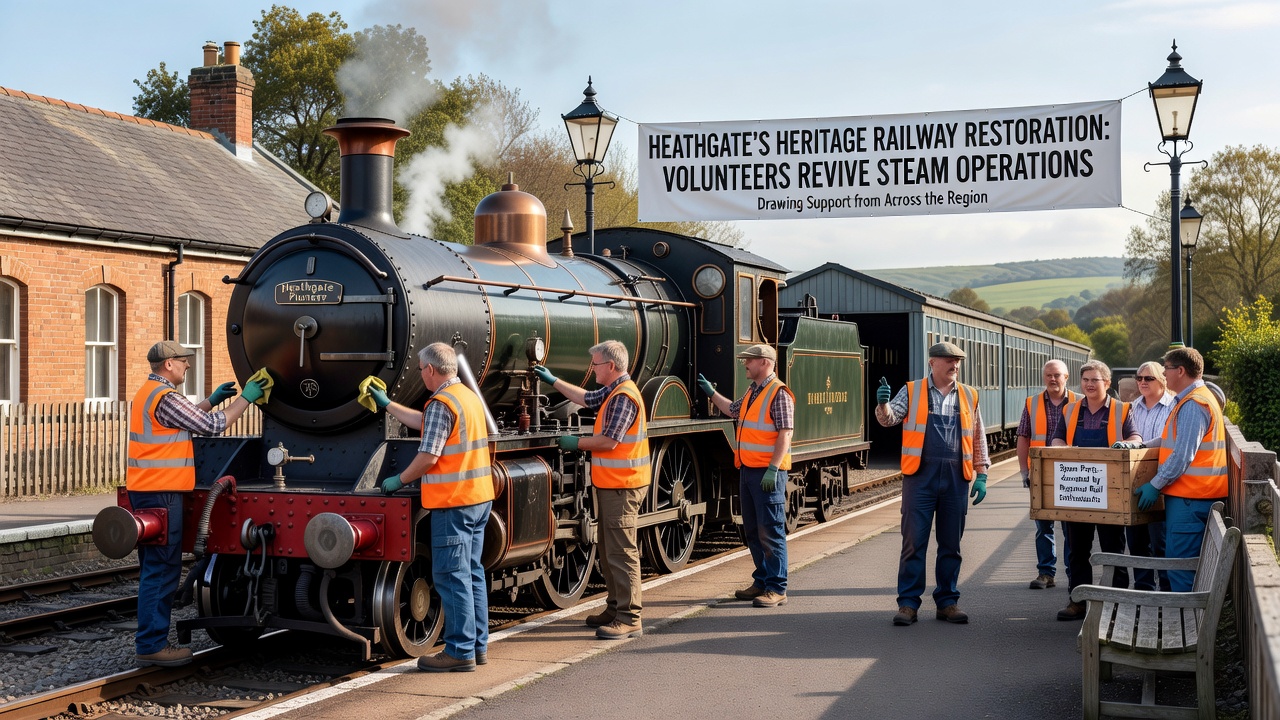
Restoration work on the Heathgate heritage railway has drawn volunteers from multiple counties since the project gained momentum in early 2024, with efforts focused on returning steam locomotives to operational status along the preserved line. The initiative centers on a former industrial route that once served local quarries and farms before its closure in the mid-20th century, and current activities include track relaying, engine overhauls, and station building repairs.
Project Background and Timeline
The Heathgate line originally opened in the 1890s as a narrow-gauge freight route, later converted to standard gauge for passenger services until passenger operations ended in 1952, after which freight continued sporadically until 1968. Preservation groups began acquiring sections of the trackbed in the 1980s, yet major restoration stalled until a 2023 grant from regional heritage funds restarted coordinated volunteer recruitment. By late 2025, crews had restored roughly three miles of track, and planners now target a full steam-hauled service launch during November 2026.
Volunteer Recruitment and Roles
People from surrounding areas including those in Dorset, Somerset, and Wiltshire travel to the site on weekends and during scheduled work weeks, handling tasks that range from vegetation clearance to boiler inspections on the two resident steam engines. One study by the Heritage Railway Association noted that similar projects across the UK rely on 70 percent volunteer labor for routine maintenance, and Heathgate follows that pattern with shifts organized through an online rota system. Coordinators report that participants often bring specialized skills from engineering backgrounds, while others learn on-site through supervised apprenticeships.
Technical Restoration Details
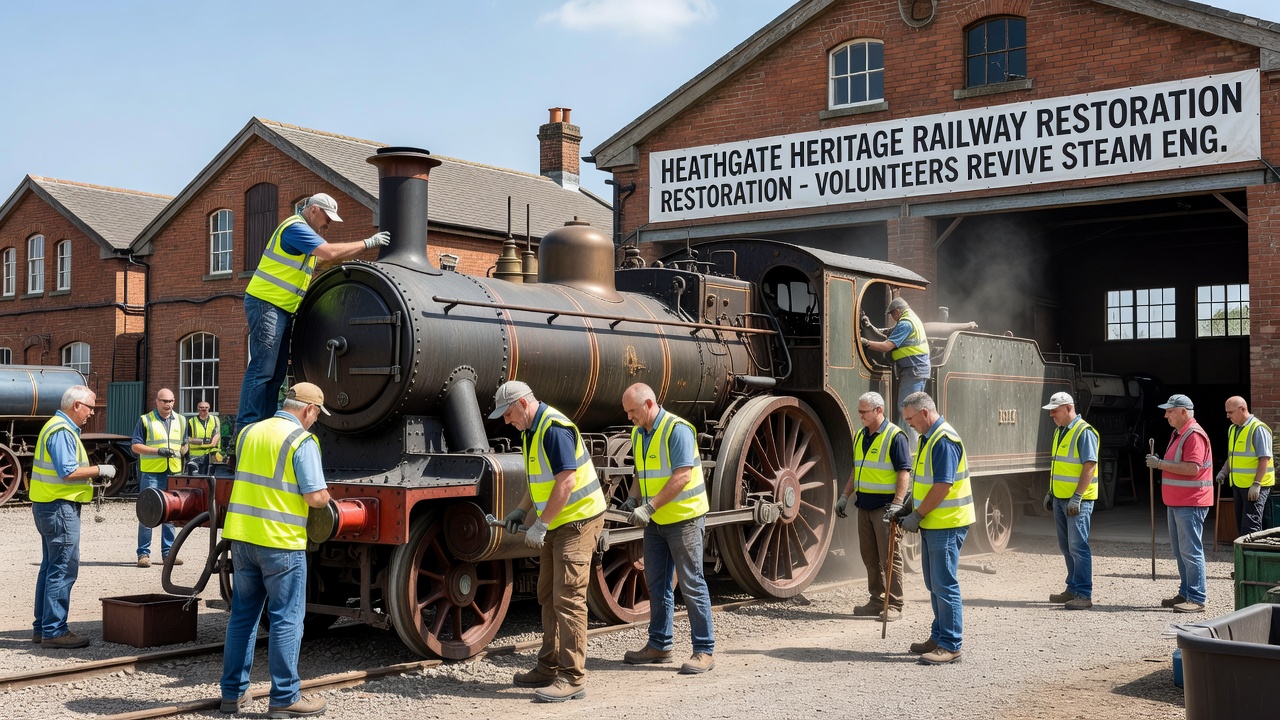
Engine crews focus on returning a 1940s-built 0-6-0 tank locomotive to working order, which involves replacing firebox stays and renewing the motion components that control valve timing. Track teams have installed new sleepers and ballast to meet current safety standards set by the Office of Rail and Road, while signal engineers rebuild semaphore signals using original patterns recovered from local scrapyards. Data from comparable restorations show that such mechanical work typically requires 1,200 to 1,500 volunteer hours per engine before certification for passenger hauling can occur.
Community and Funding Support
Local businesses supply materials at reduced rates, and a crowdfunding campaign launched in 2024 raised funds for specialized parts such as copper boiler tubes sourced from suppliers in Germany. Observers note that partnerships with schools in the area have introduced educational visits where students learn about industrial history while assisting with minor tasks like painting station signs. According to figures released by the European Federation of Museum and Tourist Railways, heritage lines that integrate community programs often see sustained volunteer numbers across multiple seasons.
Upcoming Milestones
November 2026 remains the target date for the first public steam runs, with test operations scheduled to begin in the preceding summer months once final safety inspections conclude. Planners have coordinated with regional tourism boards to promote the line as part of broader heathland heritage trails, and ticket pre-sales are expected to open through the project's website. Those coordinating the effort emphasize that continued volunteer participation will determine whether extended running days become feasible in following years.
Conclusion
The Heathgate restoration demonstrates how coordinated volunteer networks can revive disused railway infrastructure, with progress measured through completed track sections and mechanical certifications rather than subjective assessments. Ongoing work through 2026 will provide additional data on the viability of similar projects in protected rural zones.